
A BGA rework station is an essential tool in modern electronics manufacturing and repair, designed to remove, reball, and resolder Ball Grid Array (BGA) components on printed circuit boards (PCBAs). As electronic devices become smaller and more complex, traditional repair methods are no longer sufficient, making advanced SMT rework stations a necessity.
In this guide, we explain how a BGA rework station works and why it plays a critical role in high-reliability industries such as automotive, telecom, and medical electronics.
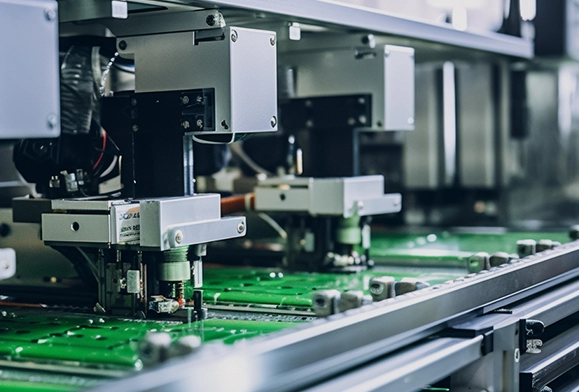
A BGA rework station is a precision system used to:
Remove defective BGA components
Clean and prepare PCB pads
Reball or replace components
Resolder with controlled heating
Unlike manual soldering tools, modern systems integrate:
Optical alignment systems
Multi-zone heating control
Temperature profiling software
These features ensure high success rates and minimal damage to PCBAs.
The BGA rework process typically involves the following steps:
The PCB is gradually heated from the bottom to reduce thermal stress and prevent warping.
A top heater applies controlled heat to melt solder balls, allowing safe removal of the BGA component.
Residual solder is cleaned from PCB pads to ensure proper reattachment.
Using a CCD camera and prism system, the new component is precisely aligned with PCB pads.
Learn more about alignment methods in our BGA rework station guide (/bga-rework-station-guide)
The component is soldered using a controlled temperature profile.
Gradual cooling prevents thermal shock and ensures joint reliability.
Modern BGA rework solutions rely on several advanced technologies:
Optical Alignment Systems
Closed-loop temperature control
Infrared or hot air heating
Thermal profiling software
These technologies significantly improve precision and repeatability.
Using a professional SMT rework station helps manufacturers:
Reduce scrap and material cost
Improve repair success rate
Maintain product reliability
Handle high-density PCB designs
Q1: What is a BGA rework station used for?
It is used to remove and resolder BGA components on PCBAs with high precision.
Q2: Can BGA rework be done manually?
Manual rework is risky and not recommended for fine-pitch components.
 EN
EN
 es
es  ko
ko  de
de  it
it  pt
pt  th
th  ar
ar  pl
pl  vi
vi  tr
tr  ru
ru